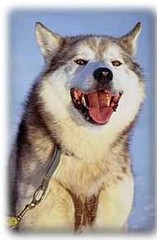
The "Alaskan husky" is a term so widely used by mushers and dog fanciers to describe a racing sled dog typically found in the northern dog yards of Alaska and Canada that I presumed it would be an easy job to journalize the development and description of this unregistered breed of working dog. However, I soon discovered that the ideas we take so much for granted around our peers and colleagues may seem strange and convoluted to others with a different viewpoint. While we may talk in exactly the same terms, for example, about the Alaskan husky with sled dog enthusiasts around the world it is very possible that we mean two different things. I first needed to discover how my fellow Alaskan mushers thought and viewed the world of working animals, and more specifically, the Alaskan husky. To help crystallize my thoughts, I called Tim White, president of the International Federation of Sled Dog Sports, Ric Swenson, five time winner of the Iditarod sled dog race, Bill Cotter, a successful mushing competitor in long distance races, Joe Reddington, winner of the Fur Rendezvous and North American sprint dog championships, Dee Jonrowe, one of the most famous and successful woman mushers racing the Iditarod, Doug Swingley, winner of the 1999 Iditarod, and the redoubtable George Attla, the winner of so many sprint races over four decades of racing that he stands alone as a mushing legend. I found a surprising consistency of thought and opinion amongst these experts.
Coat: White double coat, lies flat on the body, longer on the chest and neck, almost forming a mane and it should be long on the tail and buttocks. Weather resistant, non-matting, little doggy odor.